

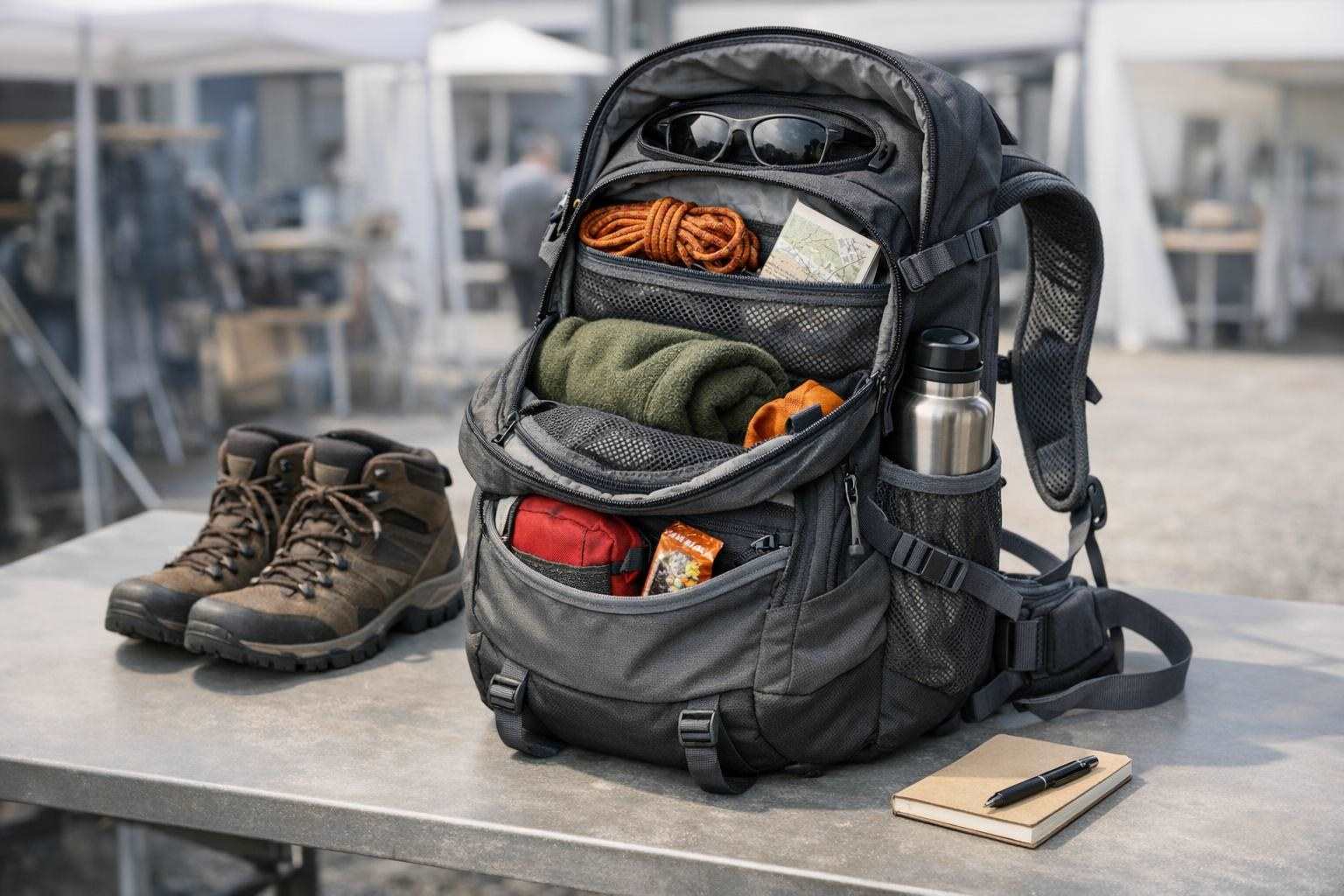
Comparing Outdoor Equipment Demonstrations Before Choosing What to Buy
Many store events are designed to sell the most expensive equipment and turn a short shopping list into a whole catalogue of conflicting features. The visitor can turn up with a few needs to be filled and by the end of the day have a long list of features that have to be compared. The list of features for consideration can be reduced by remembering how the items will be used and the results of the demonstrations can be written down and reference returned to later to see if as much benefit is derived from the item as was promised by the event.
Start with the trip you actually need to support
Take the trip with you to the show. The usual trip that you make that needs some new equipment to support it is a good description of what you need for your days out. This description will be useful to the person demonstrating the equipment for the types of problems that the feature will solve for you. Note down the problems with your current gear and use these for your evaluation of the various features on show.
Identify problems that you have with current gear. How does the current pack sit on your back when it is lightly loaded? Where do your boots rub? Are the pockets on current gear really useful or are they features that you have never really used? Have you ever had a problem cleaning current footwear? Identify all of the problems that you have with current gear and then use these against the products that you evaluate at the event.
This way, a checklist of criteria relevant to the type of equipment in question (e.g. camping, optics, clothing and accessories or shooting sports) can be compiled beforehand. When looking at different models of equipment, the intended activity and the user's level of experience with the outdoors can then be used as a basis of comparison.
Turn demonstrations into comparable observations
Outdoor events where equipment is shown to be used are wonderful places to shop, but short demonstrations often are very 'colored' and thus hard to compare. By having the same questions in mind (what problem does this feature solve? How does it affect fit, setting up, cleaning and carrying the pack? Is this benefit needed for the type of trips Jordan wants to go on or only for longer trips?) one can get a good grip on what is shown.
When trying on footwear, for example, check how the shoes feel with the socks that you normally wear. Pay attention to any pressure points, and don't just look at the amount of cushioning. When trying on a pack, for example, adjust the straps to their normal setting. Open and close any frequently used compartments, and then check how the load sits when the pack is only partially full.
Take notes as you try on gear, review models, and ask questions of sales staff. Write down the name of the product, its positive and negative attributes, and any additional information or questions you need to research further after the event. Consider taking photos of different models, but make sure to ask the sales staff first. You will be surprised at how many products look similar, and notes or even photos will help to differentiate models.
Compare the whole ownership decision
Equipment also includes accessories, maintenance items, parts that may need to be replaced in the future, items for storing the equipment and items of clothing. All of these need to be included in the initial cost of purchasing the item as well as in the overall cost of owning the item in the long term.
Using a simple budget, agree with your self a preferred price for the product and a maximum price that you are willing to spend. A show offer, a bundle or even a demonstration only offer does not mean you have to buy it. Ask for the full terms and conditions, what you will get, what the return policy is, and any service or warranty that they will provide.
Don't confuse wanting something with needing it. There is a big difference between an item that can be improved upon, and one that is dangerous, cannot be repaired, or is just not suitable for the intended activity. Leave these for another time and wait until you have had time to compare like with like on all outlets.
Check venue rules before handling specialist equipment
Be aware of the rules of the venue where you go to find your outdoor gear. Although some rules might seem obvious, others might not. Read the official event guidance on the organiser's website before you go and follow the staff's instructions when you are on the site.
When looking at shooting-sports equipment, know the event's rules for shooting-sports equipment preparation. Be aware of all the safety measures for the event and ask the staff for explanation when necessary. Do not touch any products unless specifically invited to do so and always follow the organizer's rules for the demonstrations. The organiser's rules for the event's demonstrations are always within the event's stated boundaries and do not need to be flexible for curiosity.
Note also that many outdoor products have specific operational risks associated with them, so make sure you get to see them being used safely and are able to ask specific, detailed questions of the person running the demonstration. Check also that you have any written instructions handed out to you and look for items that are demonstrated in a rushed manner. There is likely to be better information available elsewhere about such products.
Leave room for a decision after the event
As the afternoon draws to a close, Jordan's notes comprise a three-page summary of three or four possible packs, and two pairs of boots. He goes through the list of criteria that he had written down before he went to the show, and crosses off anything that didn't make it.
After the event you can then review all your options and make a decision at home comparing like for like i.e. go back to the same criteria that suited your needs and requirements for choosing equipment in the first place, look up manufacturer instructions for care and maintenance, look up current official government and venue information on items such as guns and safety equipment etc.
A little time after an event to look at a long list of products is required. The impression of a demonstration will wear off and you will see which of the features that you have been impressed with, are still important to you some time later. In the end, you want to be able to justify your choice to yourself or others and be able to recall the reasons for it.
Planning for an event does not mean one has to avoid all the fun equipment to buy and all the new products on display. The main goal of preparing for an event in advance is to make the most of each demonstration to answer all the questions one needs to, to be able to compare notes after, to comply with all the rules of the venue and to stick to one's budget. Modest choices that fit the intended trip and that can be easily and reasonably explained are the best to choose in the end.